


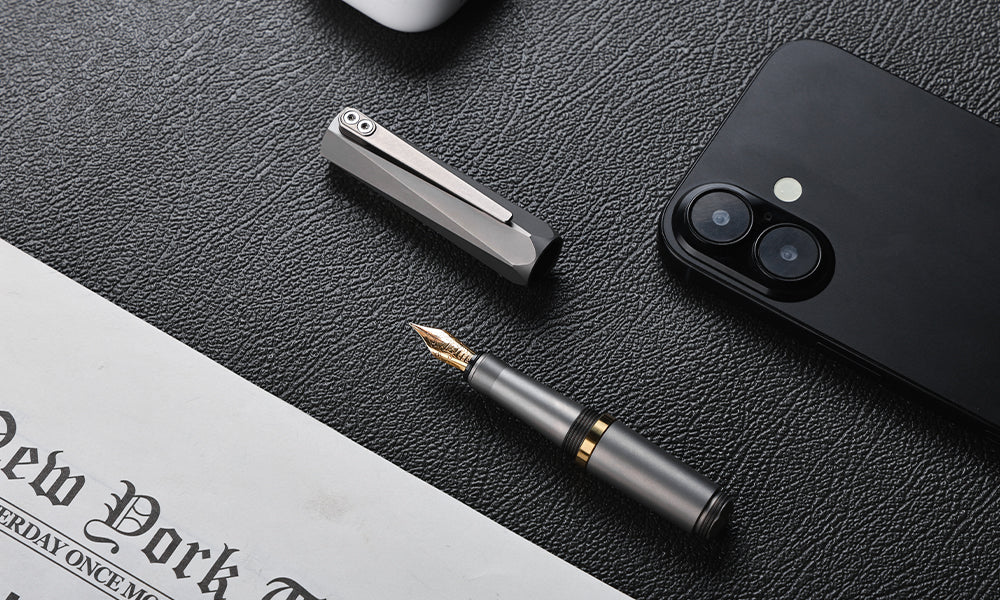
“Is titanium hypoallergenic?” is the question people ask after a cheap buckle or fashion ring leaves a red mark. They want a metal they can wear all day — on a belt, a razor, a watch, or next to food — without a rash.
Short answer: solid titanium is one of the most skin-friendly metals in common use. It is the default implant metal in hospitals for a reason. It is not a medical guarantee for every person, but it is the first recommendation when nickel in stainless steel or costume jewelry is the problem.
Belloc uses Grade 5 titanium for EDC that sits on skin, and Grade 1 titanium for cookware and cups.
What “Hypoallergenic” Actually Means
Hypoallergenic is a marketing word, not a lab certificate. It means “less likely to cause a reaction,” not “impossible.”
A skin reaction to metal is usually caused by:
-
Nickel leaching from stainless steel, white gold alloys, or plated brass
-
Copper or zinc in cheap fashion alloys
-
Sweat, soap, or leather dye trapped against the skin — which looks like an allergy but is irritation
-
A coating that wears off and exposes a different metal underneath
Titanium itself is chemically quiet. It does not need a nickel plate. The surface you touch is titanium oxide, the same family of film used on implants.
Why Titanium Is Easy on Skin
Three properties matter more than the label:
It is inert. Grade 1 and Grade 5 do not dissolve into sweat the way some nickel alloys do. Body fluids do not eat the metal.
The oxide seals the surface. A thin titanium dioxide film forms in air. If you scratch it, it grows back. There is no chrome layer to flake and leave raw steel on your wrist.
It is the implant standard. Bone screws, joint replacements, and dental fixtures use titanium because tissue accepts it and bone can grow onto it (osseointegration). Jewelry and EDC inherit that comfort, even though they are not medical devices.
Grade 5 vs Grade 1 on Skin
|
|
Grade 1 |
Grade 5 (Ti-6Al-4V) |
|---|---|---|
|
Chemistry |
Commercially pure titanium |
Titanium + aluminum + vanadium |
|
Skin use |
Excellent; also food-safe |
Excellent for all-day EDC |
|
Belloc use |
Cookware, cups |
Razors, buckles, carry tools |
Grade 5 contains a few percent aluminum and vanadium. That is standard aerospace chemistry, not a nickel plate. Hospitals use both Grade 5 and the extra-pure Grade 23 for implants. For a belt buckle or razor that never enters the body, Grade 5 is the usual structural choice and is well tolerated.
Belloc does not use Grade 5 as a food-contact surface. Pans and cups that touch food use Grade 1.
Titanium vs Other Jewelry Metals
Stainless steel (304 / 316). Many people wear it with no issue. People who already react to nickel often do not. “Surgical steel” still contains nickel.
Sterling silver. Can tarnish and leave a dark mark. Some people react to the copper in the alloy.
Gold. Pure 24k is soft and usually kind to skin. Lower karats mix in nickel or copper. White gold is a common trigger.
Plated brass or zinc. Fine until the plate wears. Then sweat hits the base metal and the rash starts.
Titanium skips the plate. What you buy is what you wear for years.
When a “Titanium” Item Still Causes a Rash
Blame the product, not the element, if:
-
The listing never states Grade 1, Grade 2, or Grade 5 / Ti-6Al-4V
-
A magnet snaps to the part (solid titanium should not)
-
The item is unusually cheap and light, like stamped aluminum with a titanium-color coat
-
Anodize or PVD is worn through on a coated steel core
-
The irritation is under a leather strap dyed with cheap pigment, not under the metal
Solid Grade 5 feels dense for its size — heavier than aluminum, lighter than steel. If it feels hollow-light, ask for the grade.
Who Should Still Be Careful
True titanium allergy is rare. If you have a complex metal sensitivity or a history of implant reactions, talk to a clinician. Do not treat a blog as a diagnosis.
For everyone else who already knows nickel is the problem, solid titanium is the practical upgrade: no plate to sweat through, no rust ring, no green wrist.
How Belloc Uses It
-
Skin-contact EDC (razors, buckles, precision tools): Grade 5 for strength and all-day comfort.
-
Food-contact pieces (cookware, cups): Grade 1 so the surface stays non-reactive with acidic food as well as skin.
Frequently Asked Questions
Is Grade 5 titanium hypoallergenic?
For everyday wear, yes for the large majority of users. Grade 5 is Ti-6Al-4V. It is widely used in aerospace and in many medical instruments. It is not a nickel alloy.
Can you be allergic to titanium?
It is uncommon. Most “titanium allergies” turn out to be coated steel, leftover polish, or a reaction to another part of the product (leather, adhesive, steel hardware).
Is titanium jewelry safe for piercings?
Implant-grade titanium (often Grade 23 / Ti-6Al-4V ELI) is a standard in professional piercing. Consumer EDC is not sold as a piercing implant. Use jewelry specified for that use.
Does anodized titanium irritate skin?
Anodizing grows oxide on the titanium. It does not add nickel dye. Color can wear on high points; the metal underneath is still titanium.
Will sweat cause a titanium rash?
Sweat does not corrode solid titanium. Rinse salt and gym sweat so residue does not sit under a strap. Irritation from trapped moisture is not the same as a metal allergy.
Talk to Belloc
Questions about skin-safe Grade 5 EDC or Grade 1 cookware? Contact support@bellocedc.com.
Partager:
Does Titanium Rust? Waterproof, Hypoallergenic, and How to Care for It
Why Is Titanium Expensive?